
 By admin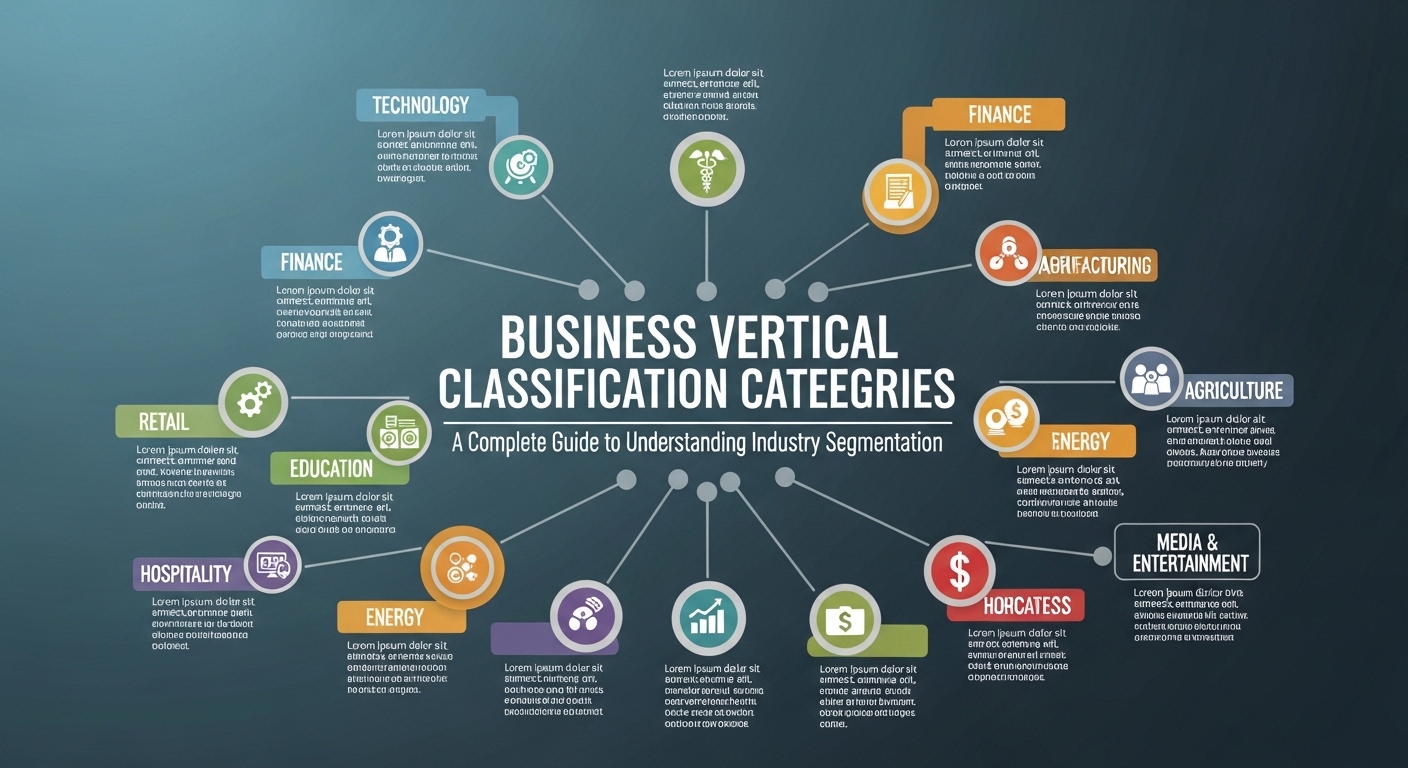
In today’s dynamic economic landscape, understanding business vertical classification categories is essential for organizations aiming to position themselves effectively in the market. These categories help define how businesses are grouped by industry focus, products, services, and target audiences. Whether for strategic planning, marketing, or investment analysis, clear classification allows companies to operate with better direction and clarity.
What Are Business Vertical Classification Categories?
The term business vertical classification categories refers to the systematic grouping of companies into specific industries or sectors based on the nature of their operations. A “vertical” typically focuses on a particular niche or market segment, allowing businesses to specialize and tailor their offerings.
For example, within the broader technology sector, verticals may include software development, cybersecurity, and cloud computing. Each vertical operates with its own trends, customer needs, and competitive dynamics.
This classification is widely used by analysts, marketers, and policymakers to better understand market structures and economic activity.
Importance of Business Vertical Classification Categories
The relevance of business vertical classification categories extends across multiple aspects of business operations. Companies use these categories to identify their core market, understand competitors, and develop targeted strategies.
From a marketing perspective, vertical classification helps in crafting specific campaigns that resonate with a defined audience. Investors also rely on these categories to evaluate opportunities and assess risks within particular sectors.
The table below highlights key benefits:
| Aspect | Importance |
|---|---|
| Market Clarity | Helps identify target audience |
| Strategic Planning | Supports focused business strategies |
| Competitive Analysis | Enables benchmarking against similar companies |
| Investment Decisions | Assists in evaluating sector performance |
These advantages demonstrate why proper classification is crucial for sustainable growth.
Major Types of Business Vertical Classification Categories
There are several widely recognized business classification categories that cover the majority of industries. These categories are often used globally, though specific classifications may vary by region or organization.
The most common verticals include technology, healthcare, finance, retail, manufacturing, education, and entertainment. Each of these sectors contains multiple subcategories that further refine the classification.
A general overview is provided below:
| Vertical Category | Description |
|---|---|
| Technology | Software, hardware, IT services |
| Healthcare | Hospitals, pharmaceuticals, medical devices |
| Finance | Banking, insurance, investment services |
| Retail | Consumer goods, e-commerce, brick-and-mortar stores |
| Manufacturing | Production of goods and industrial equipment |
| Education | Schools, e-learning platforms, training services |
| Entertainment | Media, gaming, film, and music industries |
These categories form the foundation for understanding how businesses are organized within the economy.
How Business Vertical Classification Categories Work
The functioning of business vertical classification categories involves analyzing a company’s primary activities and assigning it to the most relevant industry group. This process may consider factors such as revenue sources, product offerings, and target markets.
For instance, a company that develops mobile applications would typically fall under the technology vertical, specifically within software development. However, if the same company focuses on healthcare apps, it may also intersect with the healthcare vertical.
This overlap highlights the complexity of modern business environments, where companies often operate across multiple categories.
Subcategories Within Business Classification Categories
To provide more detailed insights, business classification categories are often divided into subcategories. These subdivisions allow for more precise analysis and better understanding of niche markets.
For example, within the retail vertical, subcategories may include online retail, luxury goods, and grocery stores. Similarly, the finance sector may be divided into retail banking, corporate banking, and fintech.
The table below illustrates this concept:
| Main Category | Subcategories |
|---|---|
| Technology | AI, cybersecurity, cloud computing |
| Healthcare | Telemedicine, pharmaceuticals, diagnostics |
| Retail | E-commerce, fashion, supermarkets |
| Finance | Fintech, insurance, asset management |
This layered approach ensures a more accurate classification system.
Role of Business Classification Categories in Marketing
Business classification categories heavily influence marketing strategies. By understanding their vertical, companies can create tailored messages that address specific customer needs and preferences.
For example, marketing in the healthcare sector often emphasizes trust and reliability, while technology marketing may focus on innovation and efficiency. This alignment between messaging and industry expectations enhances the effectiveness of campaigns.
Additionally, vertical-based marketing allows businesses to identify the most relevant channels and platforms for reaching their audience.
Challenges in Business Vertical Classification Categories
Despite their usefulness, business vertical classification categories come with certain challenges. One of the main issues is the increasing overlap between industries, driven by technological advancements and innovation.
Companies that operate in multiple sectors may find it difficult to fit into a single category. This can complicate reporting, analysis, and strategic planning.
Another challenge is the constant evolution of industries. New verticals, such as renewable energy and digital services, continue to emerge, requiring updates to existing classification systems.
Technological Impact on Business Vertical Classification Categories
Technology has significantly influenced the development of business vertical classification categories. Digital transformation has blurred traditional boundaries, creating hybrid business models that span multiple industries.
For instance, e-commerce platforms combine elements of retail, technology, and logistics. Similarly, fintech companies merge finance with advanced digital solutions.
These changes highlight the need for flexible and adaptive classification systems that can accommodate innovation and evolving market trends.
Global Standards for Business Classification Categories
Several global frameworks are used to standardize business classification categories. These include systems like the North American Industry Classification System (NAICS) and the International Standard Industrial Classification (ISIC).
These frameworks provide a consistent method for categorizing businesses across different regions, enabling better comparison and analysis. Governments, researchers, and organizations rely on these standards for data collection and policy development.
A comparison of major classification systems is shown below:
| System | Region | Purpose |
|---|---|---|
| NAICS | North America | Economic data and analysis |
| ISIC | Global | International comparison |
| SIC | Various | Historical classification system |
Such standardization enhances the reliability of industry data.
Future Trends in Business Vertical Classification Categories
The future of business vertical classification categories is likely to be shaped by ongoing innovation and globalization. Emerging industries such as artificial intelligence, green energy, and digital health are creating new categories that did not exist a decade ago.
As businesses continue to diversify, classification systems will need to evolve to reflect these changes. Greater emphasis on data-driven insights and real-time analysis is expected to improve accuracy and relevance.
Additionally, sustainability and environmental impact may become key factors in defining future business verticals.
Conclusion
Understanding business vertical classification categories is essential for navigating the complexities of modern business environments. These categories provide a structured way to analyze industries, develop strategies, and identify opportunities.
While challenges such as industry overlap and rapid change exist, the benefits of clear classification far outweigh the limitations. By leveraging these categories effectively, businesses can enhance their decision-making processes and achieve long-term success.
As the global economy continues to evolve, the role of business classification categories will remain central to understanding and shaping the future of industries.