
 By admin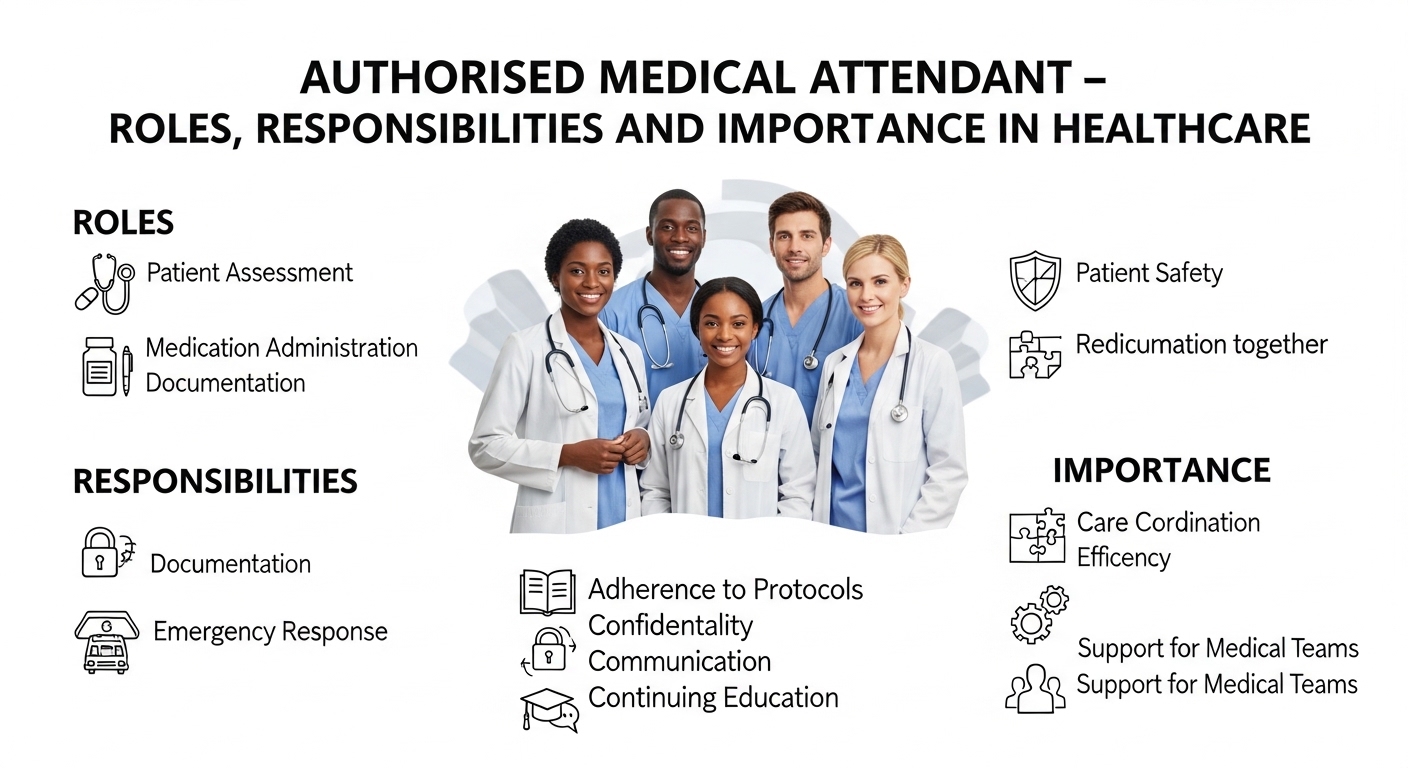
An authorised medical attendant plays a crucial role in providing healthcare services within structured systems such as government departments, organizations, and institutional frameworks. This term is commonly used in official and administrative contexts, particularly where employees are entitled to medical benefits under specific rules.
In simple terms, an authorised medical attendant is a qualified medical professional who is officially approved to provide medical care, certify health conditions, and oversee treatment for individuals covered under a particular scheme or service. Their role ensures that medical services are delivered in a regulated, reliable, and accountable manner.
What Is an Authorised Medical Attendant?
An authorised medical attendant is a doctor or healthcare provider who has been formally recognized by a government body, employer, or institution to attend to the medical needs of eligible individuals. These attendants are typically appointed under specific health schemes or service rules.
Their authority is not just medical but also administrative. They are responsible for issuing medical certificates, recommending treatments, and verifying claims related to healthcare expenses. This makes their role essential in maintaining transparency and consistency in medical services.
The concept is widely used in public sector organizations, defense services, and government employee healthcare systems.
Roles and Responsibilities of an Authorised Medical Attendant
The responsibilities of an authorised medical attendant extend beyond routine patient care. They act as a bridge between medical services and administrative processes.
One of their primary duties is to provide medical consultation and treatment to eligible individuals. This includes diagnosing illnesses, prescribing medications, and monitoring recovery. In addition, they are responsible for issuing medical certificates that may be required for leave, reimbursement, or other official purposes.
They also play a key role in recommending specialized treatment when necessary. If a patient requires advanced care or referral to a specialist, the authorised medical attendant evaluates the situation and provides appropriate guidance.
Another important responsibility is maintaining medical records and ensuring that all documentation complies with established guidelines.
Eligibility and Appointment
The appointment of an authorised medical attendant follows a structured process. Typically, only qualified and registered medical practitioners are considered for this role. They must meet specific criteria set by the appointing authority.
In many cases, government doctors working in public hospitals are designated as authorised medical attendants. Private practitioners may also be empaneled under certain schemes, provided they meet the required standards.
The selection process often involves verification of credentials, experience, and professional reputation. Once appointed, the medical attendant is authorized to provide services within a defined scope.
Importance in Government Healthcare Systems
The role of an authorised medical attendant is particularly significant in government healthcare systems. These systems often provide medical benefits to employees, pensioners, and their dependents.
Having a designated medical attendant ensures that healthcare services are standardized and accessible. It also helps in controlling costs and preventing misuse of medical benefits.
For example, when an employee seeks reimbursement for medical expenses, the certification and approval of an authorised medical attendant are often required. This adds a layer of accountability and ensures that claims are genuine.
Key Functions and Services
The functions of an authorised medical attendant can be understood through the range of services they provide. These include diagnosis, treatment, certification, and referral.
Below is a table summarizing their key functions:
| Function | Description |
|---|---|
| Medical Consultation | Diagnosis and treatment of illnesses |
| Certification | Issuing medical and fitness certificates |
| Referral | Recommending specialists or advanced care |
| Documentation | Maintaining medical records and reports |
| Verification | Approving medical claims and reimbursements |
These functions highlight the comprehensive nature of their role.
Difference Between General Doctor and Authorised Medical Attendant
While both provide medical care, there is a distinct difference between a general doctor and an authorised medical attendant. A general doctor may treat patients without any administrative responsibilities related to official systems.
In contrast, an authorised medical attendant operates within a defined framework. Their decisions often have administrative implications, such as approving leave or validating medical expenses.
This dual role makes them both healthcare providers and official authorities in medical matters.
Challenges Faced by Authorised Medical Attendants
Despite their importance, authorised medical attendants face several challenges. One of the main issues is the pressure of balancing medical duties with administrative responsibilities.
They must ensure accurate diagnosis and treatment while also adhering to strict documentation and verification processes. This can be time-consuming and demanding.
Another challenge is managing patient expectations. Individuals may sometimes expect approvals or certifications that are not justified, placing the attendant in a difficult position.
Additionally, staying updated with changing medical guidelines and administrative rules requires continuous learning and adaptation.
Role in Medical Reimbursement and Certification
One of the most critical aspects of an authorised medical attendant is their involvement in medical reimbursement processes. Their certification is often mandatory for claiming expenses.
They verify the necessity of treatments, confirm the authenticity of medical bills, and ensure that the services provided align with the rules of the scheme.
This role helps prevent fraudulent claims and ensures that resources are used appropriately. It also provides assurance to authorities that the medical services claimed are legitimate.
Legal and Ethical Considerations
The work of an authorised medical attendant is governed by both legal and ethical standards. They must adhere to medical ethics, ensuring patient confidentiality and providing unbiased care.
At the same time, they are required to follow administrative rules and regulations. Any misuse of authority or negligence can have serious consequences, including disciplinary action.
Maintaining integrity and professionalism is essential in this role, as their decisions can impact both individuals and institutions.
Future of Authorised Medical Attendants
With advancements in healthcare and technology, the role of an authorised medical attendant is evolving. Digital health records, telemedicine, and automated systems are transforming how medical services are delivered and managed.
These developments can help reduce administrative burdens and improve efficiency. However, they also require attendants to adapt to new tools and systems.
The future is likely to see a more integrated approach, where medical and administrative functions are seamlessly connected through technology.
Conclusion
An authorised medical attendant is a vital component of structured healthcare systems, especially in government and institutional settings. Their role goes beyond providing medical care, encompassing certification, verification, and administrative responsibilities.
By ensuring that healthcare services are delivered efficiently and transparently, they contribute significantly to the overall functioning of medical benefit systems. Despite the challenges, their work remains essential in maintaining trust and accountability.
As healthcare continues to evolve, the importance of authorised medical attendants will only grow, making them an indispensable part of modern medical administration.