
 By admin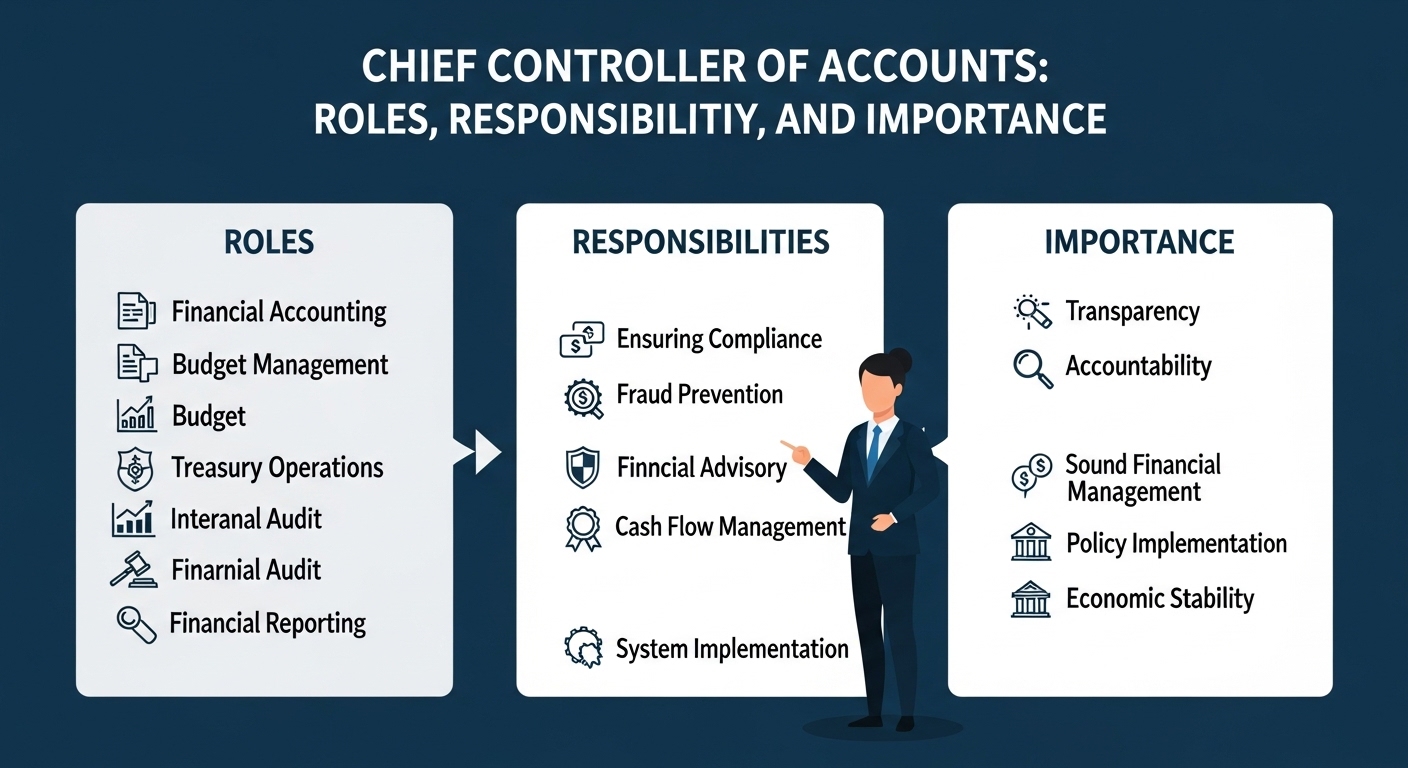
The position of Chief Controller of Accounts plays a vital role in ensuring financial discipline, transparency, and accountability within government departments and large organizations. As financial systems become more complex and regulatory frameworks continue to evolve, the importance of this role has grown significantly. The Chief Controller of Accounts acts as the backbone of financial administration, overseeing budgeting, auditing, and reporting processes with precision and integrity.
Understanding the Role of Chief Controller of Accounts
The Chief Controller of Accounts is a senior financial authority responsible for managing and supervising the accounting operations of a government ministry or major institution. This role involves maintaining accurate financial records, ensuring compliance with established financial rules, and supporting decision-making through reliable financial data.
In most government structures, the Chief Controller of Accounts operates under the Ministry of Finance or a similar governing body. The position requires a deep understanding of public financial management systems, accounting standards, and regulatory requirements.
The scope of responsibilities often extends beyond traditional accounting, incorporating financial planning, performance evaluation, and policy implementation.
Key Responsibilities of the Chief Controller of Accounts
The responsibilities associated with the Chief of Accounts are broad and multifaceted. This role demands both technical expertise and strategic oversight to ensure effective financial governance.
A detailed overview of core responsibilities is presented in the table below:
| Responsibility Area | Description |
|---|---|
| Budget Management | Preparation, monitoring, and control of budgets |
| Financial Reporting | Compilation of accurate financial statements |
| Internal Audit Oversight | Ensuring regular audits and compliance checks |
| Policy Implementation | Enforcing financial rules and government guidelines |
| Fund Management | Efficient allocation and utilization of funds |
These responsibilities highlight the critical nature of the role in maintaining financial stability and operational efficiency.
Organizational Structure and Reporting
The Chief of Accounts typically leads a team of financial professionals, including controllers, accountants, and auditors. This hierarchical structure ensures that all financial activities are monitored and executed effectively.
The reporting framework often involves coordination with multiple departments, enabling seamless communication and data sharing. This interconnected approach allows the Chief Controller of Accounts to provide accurate and timely financial insights.
Below is a simplified representation of the reporting structure:
| Position | Reporting To |
|---|---|
| Chief Controller of Accounts | Ministry/Finance Department |
| Controllers of Accounts | Chief Controller |
| Senior Account Officers | Controllers |
| Accountants and Assistants | Senior Officers |
Such a structure ensures accountability at every level and promotes efficient financial management.
Importance of Chief Controller of Accounts in Governance
The role of the Chief Controller of Accounts is essential for maintaining transparency and accountability in public finance. By ensuring proper utilization of funds, this position helps prevent financial mismanagement and corruption.
Accurate financial reporting enables policymakers to make informed decisions, ultimately contributing to economic stability and growth. The Chief of Accounts also plays a key role in auditing processes, ensuring that all expenditures are justified and properly documented.
In addition, this role supports the implementation of government programs by ensuring that funds are allocated and used effectively.
Skills and Qualifications Required
To excel as a Chief Controller of Accounts, individuals must possess a combination of technical knowledge, analytical skills, and leadership abilities. A strong educational background in accounting, finance, or economics is typically required, along with professional certifications such as CA, CPA, or equivalent.
Key skills include financial analysis, regulatory compliance, risk management, and strategic planning. Effective communication and decision-making abilities are also essential, as the role involves coordination with multiple stakeholders.
A summary of required skills is provided below:
| Skill Area | Importance Level |
|---|---|
| Financial Expertise | High |
| Analytical Thinking | High |
| Leadership | High |
| Communication | Medium |
| Technical Knowledge | High |
These competencies enable the Chief of Accounts to perform duties efficiently and contribute to organizational success.
Challenges Faced by Chief Controller of Accounts
Despite its importance, the role of the Chief Controller of Accounts comes with several challenges. Increasing regulatory requirements, complex financial systems, and the need for real-time reporting can make the job demanding.
Managing large volumes of financial data while ensuring accuracy is another significant challenge. Additionally, adapting to technological advancements such as digital accounting systems requires continuous learning and skill development.
Balancing transparency with operational efficiency is also a critical aspect of the role, especially in public sector environments.
Technological Advancements and Modern Accounting
Technology has transformed the way financial operations are managed, and the Chief of Accounts must adapt to these changes. The use of integrated financial management systems, data analytics, and automation tools has improved efficiency and accuracy.
Digital platforms enable real-time monitoring of financial transactions, reducing the risk of errors and fraud. These advancements also enhance reporting capabilities, allowing for better decision-making.
The integration of technology into accounting processes has made the role more dynamic and impactful.
Future Scope of the Chief Controller of Accounts
The future of the Chief Controller of Accounts role is closely tied to advancements in financial technology and evolving governance standards. As organizations continue to prioritize transparency and efficiency, the demand for skilled financial leaders will increase.
The role is expected to expand further, incorporating elements of strategic planning, risk assessment, and digital transformation. This evolution will require professionals to stay updated with industry trends and continuously enhance their skills.
Conclusion
The Chief Controller of Accounts is a cornerstone of financial management, ensuring accountability, transparency, and efficiency in both public and private sectors. With responsibilities ranging from budgeting to auditing, this role is integral to organizational success.
As financial systems continue to evolve, the importance of this position will only grow. By combining technical expertise with strategic insight, the Chief of Accounts contributes significantly to sustainable development and effective governance.